
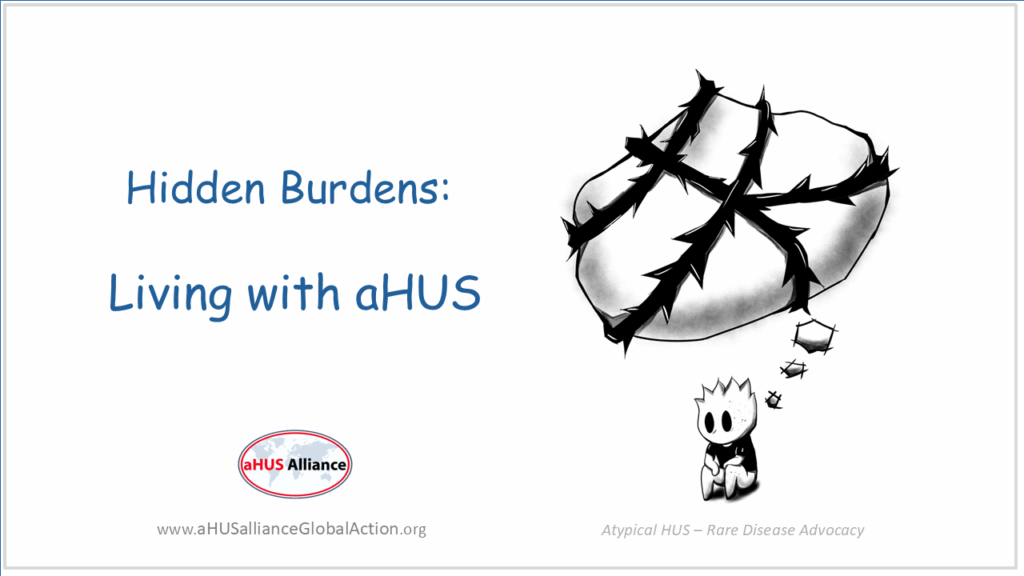
Hidden Burdens: Living with aHUS
When most people hear about a rare disease diagnosis they think primarily about medical challenges, but the burden extends far beyond clinic visits and treatment rooms. But they are woven through every aspect of daily life, creating ripples that affect work, school, relationships, and the fundamental sense of normalcy that many of us take for granted.
A diagnosis of atypical HUS (atypical hemolytic uremic syndrome) affects fewer than two people per million annually. This very rare condition requires lifelong management and often demands frequent medical appointments and ongoing monitoring to determine treatment. While the medical aspects are daunting enough, the hidden costs—measured in missed opportunities, strained relationships, and the quiet exhaustion of constant vigilance—tell a more complete story of what it means to live with or care for someone with aHUS.
Juggling It All: the ‘Time Tax’
For people living with aHUS, among the most commonly noted burdens* are fatigue, ‘quality of life’ issues, and absence impacts from work/school. Treatment regimens require regular infusions that can consume entire days when you factor in travel, waiting, the infusion itself, and recovery time. The aggregate duration of treatment administration includes waiting time for medication preparation, time for infusion, recovery, and travel to and from the clinic**.
Many adult patients find themselves navigating a difficult choice: maintain employment or manage their health effectively. Studies show that individuals with rare kidney diseases experience reduced career advancement and early job discontinuation. The unpredictability of the disease adds another layer of complexity—you can’t always plan when a flare will occur or when you’ll need urgent medical attention.
For caregivers of children with aHUS, the time burden is equally severe. Caregivers face lost income stemming from caregiving responsibilities, with many reporting having changed their working situation or remaining out of work. In one study, mothers of children with rare kidney conditions reported reducing working hours far more than fathers, experiencing over twelve times greater lost productivity costs.
The Invisible Disease Dilemma
One of the most isolating aspects of living with aHUS is that it’s largely invisible to others. The symptoms—changes in blood counts, kidney function issues, fatigue—don’t manifest in ways that casual observers can see. This invisibility creates a unique social burden.
At work and in educational settings, people with a rare disease like aHUS often face skepticism because symptoms are clinical but not visually apparent. Colleagues may wonder why someone who “looks fine” needs so much time off. Teachers might question whether a student’s absences are truly necessary. This disbelief adds emotional weight to an already heavy load, making patients feel they must constantly justify their limitations.
Isolation is common among those with rare diseases. The rarity of the condition means few people understand what patients and their families are going through. Support groups can be difficult to find, and even well-meaning friends and family may struggle to grasp the daily reality of managing aHUS.
The Ripple Effect on Family Life
When one family member has aHUS, the entire household feels the impact. Plans must remain flexible because unexpected illness events can develop rapidly and with life-threatening severity which demands immediate attention. Family vacations get canceled, celebrations are missed, and routine activities become complicated exercises in rescheduling logistics.
For families caring for pediatric patients, siblings often miss time with parents who must stay with a hospitalized child. These siblings may feel overlooked or resentful, even as they worry about their brother or sister. Parents juggle competing needs, trying to give adequate attention to all their children while managing the intense and far-reaching demands of aHUS care.
Caregivers report substantial negative impacts on their psychological and emotional wellbeing from caregiving responsibilities, with many expressing feelings of guilt and worry. For genetic conditions like aHUS, parents may struggle with guilt about having passed the disease to their child or concerns about passing it to future children.
The Education Challenge
For children with aHUS, the disease creates obstacles in their academic journey. School absenteeism due to illness is frequently reported, with some students being held back a year or dropping to lower levels of education. These educational disruptions can have lasting effects, and may limit career options in adulthood.
The impact isn’t just about missing days. Children with aHUS may feel “different” from classmates, which can be awkward or isolating during a time when ‘fitting in’ feels crucial. Low energy, focus challenges, or cognitive changes which can occur due to known aHUS impacts can make everyday school tasks harder to manage.
Caregiver Stress and Workplace Support
The burden on caregivers extends into their workplaces as well. When they need time off for medical appointments or to care for a sick loved one, coworkers must cover their workloads during absences. This can create tension and guilt, as caregivers worry about burdening their colleagues while simultaneously needing flexibility that traditional work arrangements don’t easily accommodate.
Atypical HUS health changes can be dramatic but not visible to casual observers. Imagine how this scenario plays out in the workplace: How would a caregiver meet the challenges of explaining to an employer (and colleagues) that a family member living with aHUS could unexpectedly cause an absence of an unpredictable number of workdays due to treatment or hospitalization for this life-threatening but invisible disease?
Given this, it’s not surprising that depression and anxiety are among the most commonly reported psychosocial impacts among patients with rare kidney diseases and their caregivers. The constant stress of managing medical appointments, financial pressures, and the unpredictable nature of the disease takes a significant emotional toll.
The Financial Reality
Economic stressors on patients and aHUS families should be obvious. Beyond the direct medical costs—which are a huge and stressful factor—families face numerous out-of-pocket expenses. Transportation costs related to medical appointments, ancillary devices, and copayments for therapies add up quickly. Some families are forced to restrict treatment due to high costs, others adjust their lifestyle or may take on loans to meet expenses due to the financial drain.
Annual lost productivity costs associated with aHUS treatment can be substantial, with patients losing time from work or school for treatment administration. The economic impact compounds over time, potentially affecting a family’s ability to save for college, retirement, or other long-term goals.
Burdens of Living with Atypical HUS – more than just Medical Challenges
Pyschosocial Impact:
- Isolation and feeling misunderstood due to the invisible nature of symptoms
- High rates of anxiety and depression among both patients and caregivers
- Strain on family relationships and difficulties maintaining friendships
- Feelings of guilt, particularly for parents of children with a genetic link to aHUS, or feeling like a burden on loved ones
- Family planning and inherited genetics of aHUS, including people with known genetic predispositions but no triggered activity.
Economic Burden:
- Significant income loss from reduced work hours or job discontinuation
- Substantial out-of-pocket medical expenses beyond insurance coverage
- Long-term financial impact on career advancement and earning potential
- All apply to Caregivers (as well as adult aHUS patients), particularly mothers of pediatric patients, who often experience disproportionate financial burden from reduced working hours
Lifestyle Disruption:
- Frequent medical appointments, usually consuming hours but sometimes entire days
- Unpredictable flares requiring sudden schedule changes and canceled plans
- Educational setbacks for children, including school absences and academic difficulties
- Limited ability to engage in spontaneous activities or maintain normal routines
- Travel challenges, for work or recreation, as patients must remain near specialized medical facilities
Workplace and Educational Challenges:
- Skepticism from employers, teachers, and colleagues who don’t understand invisible illnesses
- Uncertain illness length, severity of organ function damage, and follow up treatment plans can derail work projects and production
- Need for frequent accommodations that may strain workplace relationships
- Career advancement limitations due to absences and unpredictability
- Educational delays and missed opportunities for students
Family System Strain:
- Siblings of pediatric patients experiencing parental absence during hospitalizations
- Disruption of roles, sometimes with challenging needs, between partners and among children
- Entire household schedules revolving around treatment and appointments
- Difficulty balancing needs of all family members
- Emotional exhaustion affecting the whole family unit
Living with aHUS requires more than medical resilience—it demands a complete reorganization of life’s priorities and rhythms. While recent treatment advances have improved outcomes, the broader burden remains substantial. Understanding these challenges is essential for healthcare providers, employers, educators, and policy makers who want to provide meaningful support to families navigating this difficult journey.
For those living with rare diseases like aHUS, acknowledging the full scope of the burden validates their daily struggles and opens pathways to better support systems. The medical challenges may be rare, but the need for understanding, flexibility, and compassion is universal.
Dig Deeper: our Info Sources
**Greenbaum LA et al. Functional Assessment of Fatigue and Other Patient-Reported Outcomes in Patients Enrolled in the Global aHUS Registry. Kidney Int Rep. 2020 May 19;5(8):1161-1171. doi: 10.1016/j.ekir.2020.05.003.
*Hubben A, Brown J, Burke L, Woodward L, Martin C, McCrae K, Chaturvedi S. The Patient-Reported Outcomes Measurement Information System perspective of adults with long-standing atypical hemolytic uremic syndrome. Res Pract Thromb Haemost. 2025 Oct 13;9(8):103224. doi: 10.1016/j.rpth.2025.103224.
*Palagyi A, Sengupta A, Moorthy M, Malik C, Barratt J, Devuyst O, Ulasi II, Gale DP, Wang S, Angell B, Jha V, Jan S. Systematic Scoping Review of Socioeconomic Burden and Associated Psychosocial Impact in Patients With Rare Kidney Diseases and Their Caregivers. Kidney Int Rep. 2024 Dec 10;10(3):838-854. doi: 10.1016/j.ekir.2024.12.005.
Click Here for a partial archive of our website articles on Patient Reported Outcomes (PROs)
…and More on this Topic:
*Azoulay E et al. Post-traumatic stress disorder and quality of life alterations in survivors of immune-mediated thrombotic thrombocytopenic purpura and atypical hemolytic and uremic syndrome. J Crit Care. 2023 Aug;76:154283. doi: 10.1016/j.jcrc.2023.154283.
*Bouwmeester RN et al. Living with Atypical Hemolytic Uremic Syndrome in the Netherlands: Patient and Family Perspective. Kidney Int Rep. 2024 Apr 27;9(7):2189-2197. doi: 10.1016/j.ekir.2024.04.047.
*Dacheva, A et al. Costs of Illness of Atypical Hemolytic Uremic Syndrome (aHUS). ISPOR: EE26, Value in Health, Volume 25, Issue 12, S57 – S58
*Levy et al. Quantifying the economic effects of ravulizumab versus eculizumab treatment in patients with atypical hemolytic uremic syndrome. Medical Economics, 25(1), 249–259. https://doi.org/10.1080/13696998.2022.2027706
Citation Disclaimer:
aHUS Alliance Global Action (L Burke, L Woodward) were coauthors of the 2025 Hubben et al publication source: Patient-Reported Outcomes Measurement Information System perspective of adults with long-standing atypical hemolytic uremic syndrome.
Website Disclaimer:
Our content creation process includes reviewing publications, exploring interviews, and gaining insights from information across social media and within news articles in the public domain. Any use of AI generated information has been thoroughly reviewed and edited to ensure factual accuracy.