
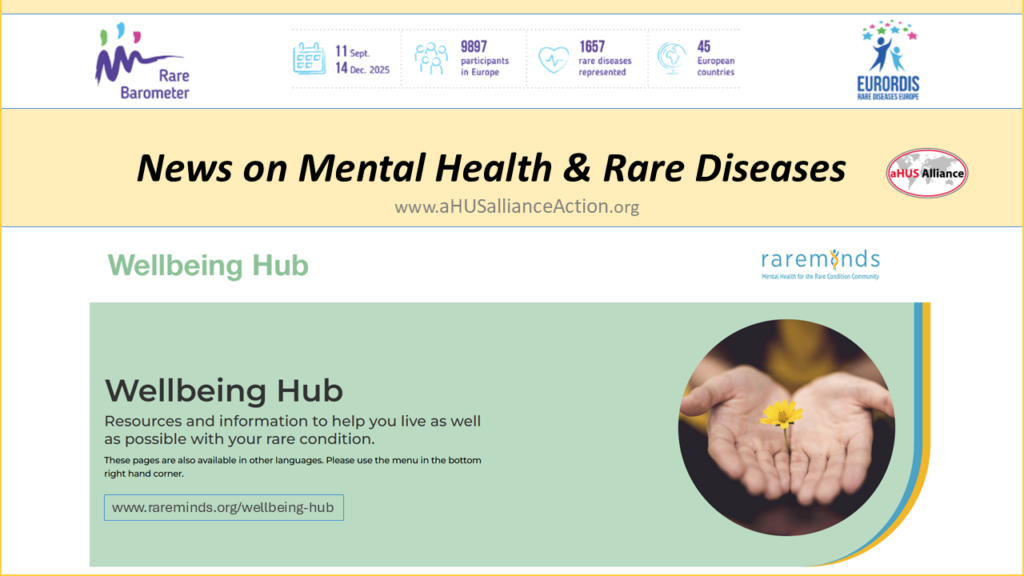
Our aHUS Alliance Global Action team recently received an email from the people at RareMinds, a UK-based organization whose mission in part reads, “Our vision is that the psychological and emotional aspects of living with a rare condition are recognised as an integral part of rare condition care, with access to specialist quality services for all.”
Their focus is on mental health for those people living with a rare disease, which encompasses a wide and holistic approach. RareMinds offers deep resources about mental health and rare conditions. Of particular interest to those with atypical HUS is the RareMinds section on ‘Fatigue, Tiredness & Exhaustion’ as fatigue is a key challenge for people diagnosed with aHUS.
From September 2025 to December 2025, EURORDIS conducted a Rare Barometer survey to gain insights into the mental health of European rare disease patients and their families, gathering the answers from nearly 9,900 participants. The indepth report of the EURORDIS Rare Barometer will be released on 9 October 2026, with a preview HERE, but the RareMinds email we received noted the following data from the Rare Barometer survey :
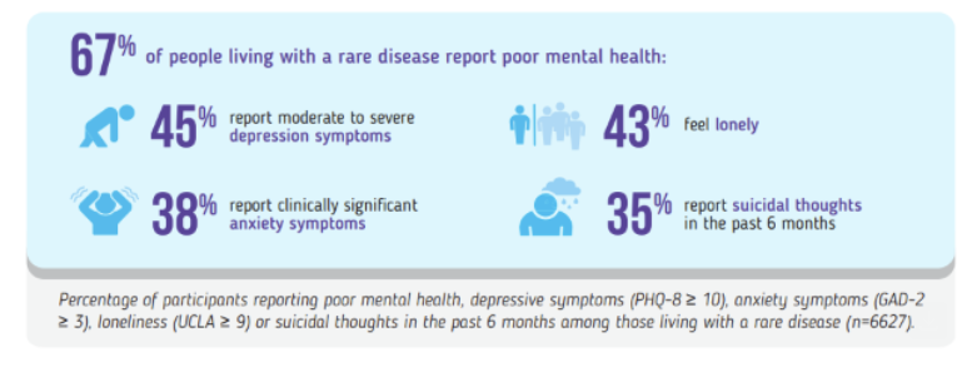
“Seven in ten (68%) people living with a rare condition and their family members report poor mental health, with levels of distress comparable to those seen during the COVID-19 pandemic and in highly vulnerable populations.
44% of people report moderate to severe depressive symptoms, seven times the rate in the EU general population (6.1%)
42% report clinically significant anxiety symptoms, seven times the EU rate (5.4%)
45% feel lonely, four to twenty times the EU rate (2–10%)”
One section within the RareMinds’ Wellbeing Hub offers an array across the topic of ‘Relationships’ which includes an often neglected area, ‘Parenting’, as well as resources to help rare disease patients and their families cope with talking to others (extended family, coworkers) and a section on interpersonal relationship aspects (to include partner intimacy). Many areas include practical tools and multiple assets to delve into, such as the video and helpful tips listed to support people in “Managing tiredness, exhaustion and fatigue”.
Navigating a rare disease can feel incredibly isolating, and that’s true not just for the person directly affected but for their family members as well. Taking charge of your mental health is just one component among the many other areas of medical wellness. Digital resources like the RareMinds and other online options can be excellent tools to provide information, gain insight, and provide encouragement but they are built to support you alongside professional medical help – it does not replace it. If things feel overwhelming or you are in a crisis, connecting with local crisis teams or immediate healthcare providers will help you get the safe, hands-on care you need and deserve.

Looking for more on this topic?
Check out our article Mental Wellness: Insights & Resources, with detailed sections on
Mental Health: Types of Therapy | Ways to Nurture Mental Wellness | Mental Health Toolkit & Resources